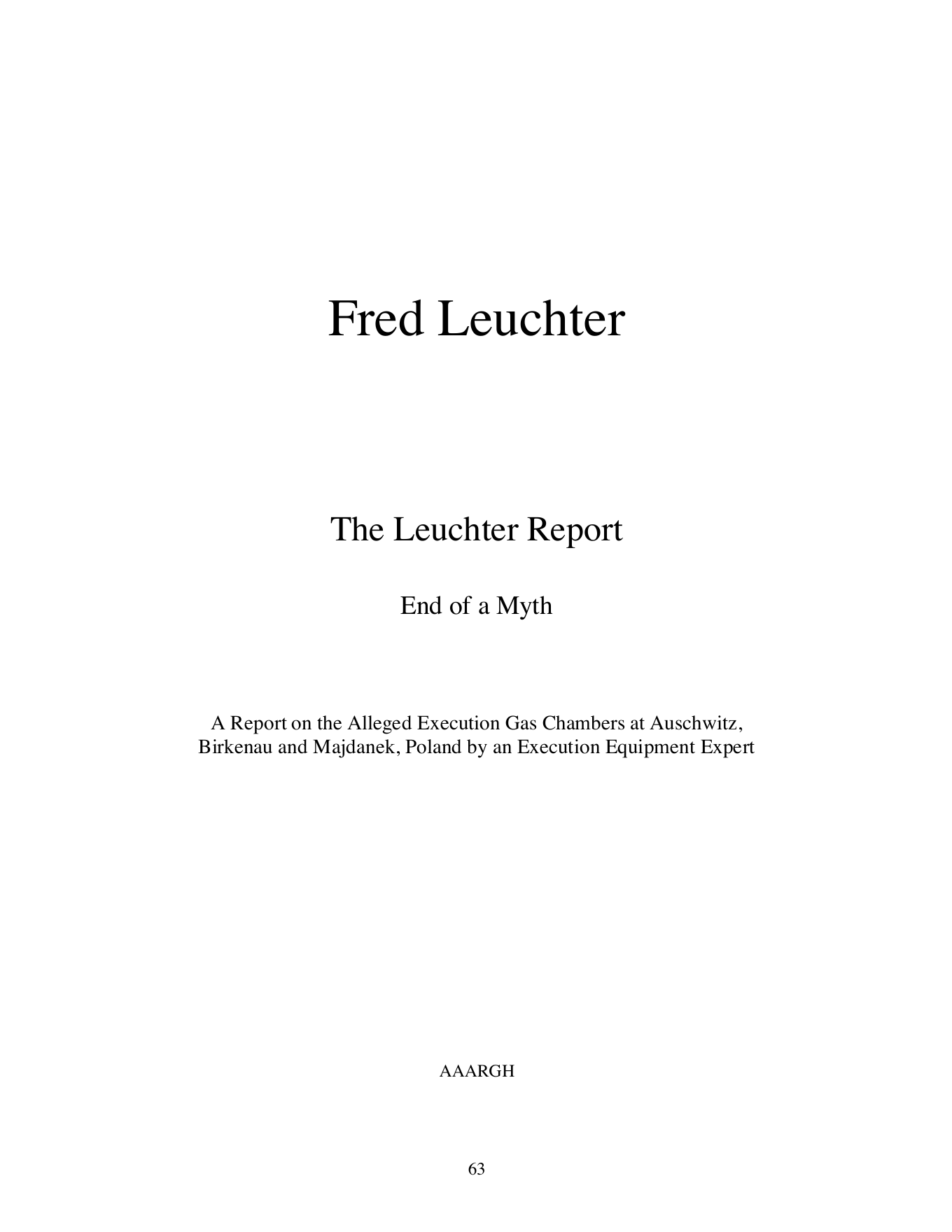
Finding: The record strongly supports intellectual and programmatic influence: Faurisson framed the inquiry, contacted and questioned Leuchter, wrote the foreword, and authored a 1980 article that the report cites. Editorial involvement is plausible but undocumented. The available evidence does not establish identifiable English prose ghostwriting, concealed authorship of the entire report, or sole authorship.
The 1988 front matter records Faurisson's role

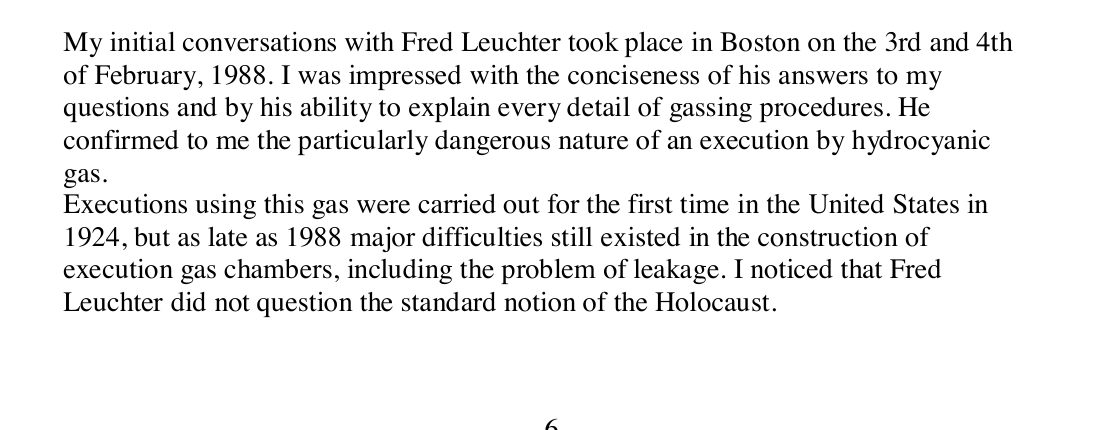
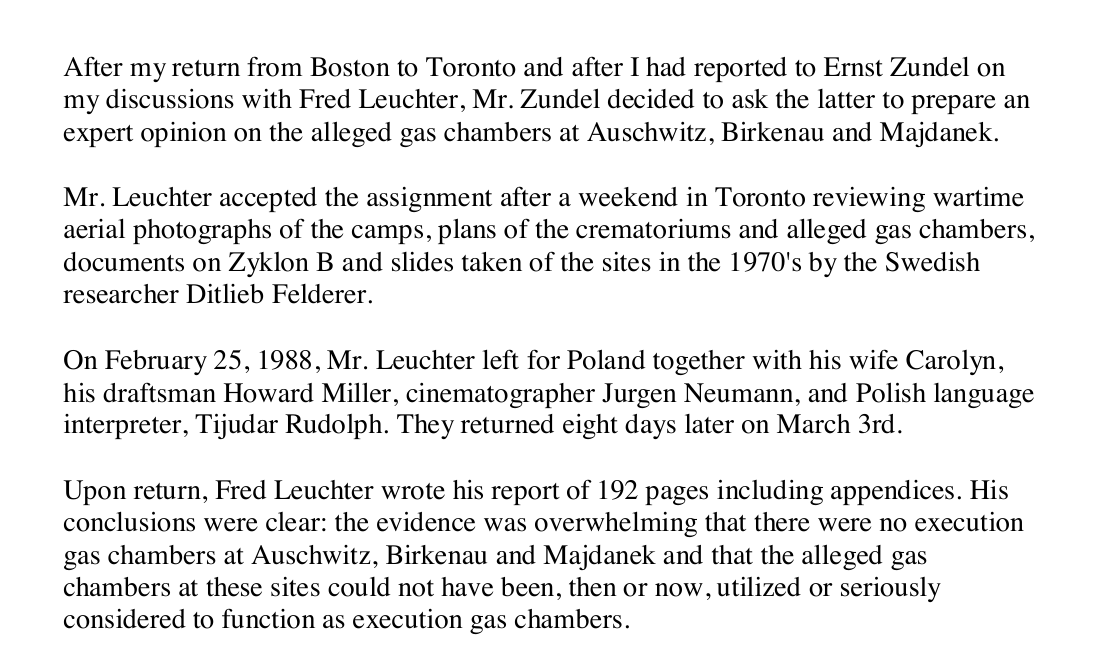
Faurisson was not a peripheral endorser
His own account places him at the start of the assignment. He questioned Leuchter and reported those discussions to Zündel. The foreword says Leuchter later spent a weekend in Toronto reviewing photographs, plans, Zyklon material, and earlier site slides, but it does not identify Faurisson as a participant in that review. The documented meetings and questions establish intellectual and programmatic involvement before the trip.
The same contemporaneous account explicitly assigns the act of writing to Leuchter. That sentence is not conclusive. The foreword was signed April 23, eighteen days after the report's April 5 completion date, but it is closer in time than any later ghostwriting claim and cuts against a confident sole-author theory.
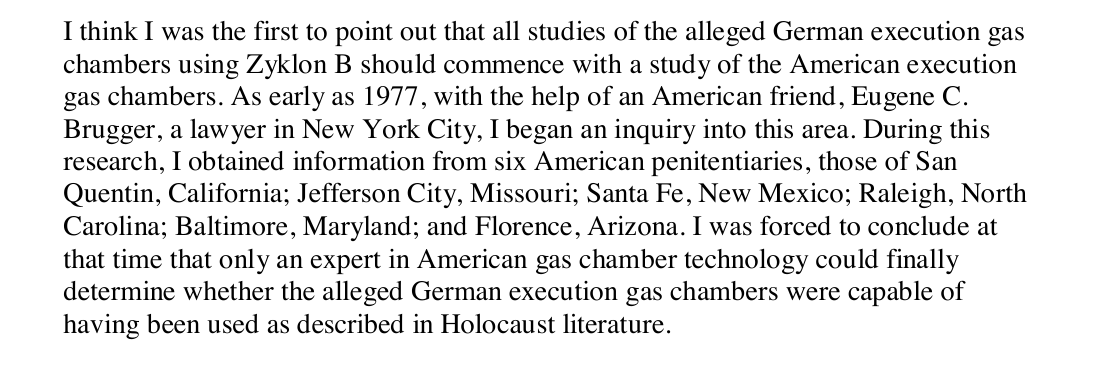
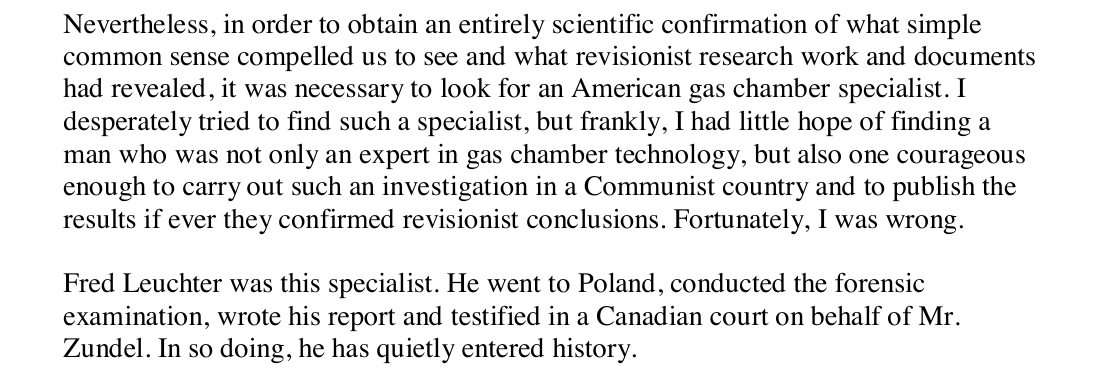
The comparison design predates the commission
The foreword does more than claim influence after the fact. It says Faurisson had pursued the American-chamber benchmark for years and sought a specialist to test an already-formed conclusion. That makes the report's organizing comparison traceable to Faurisson even if Leuchter composed the prose.
The report follows Faurisson's earlier program
American execution hardware as the governing benchmark
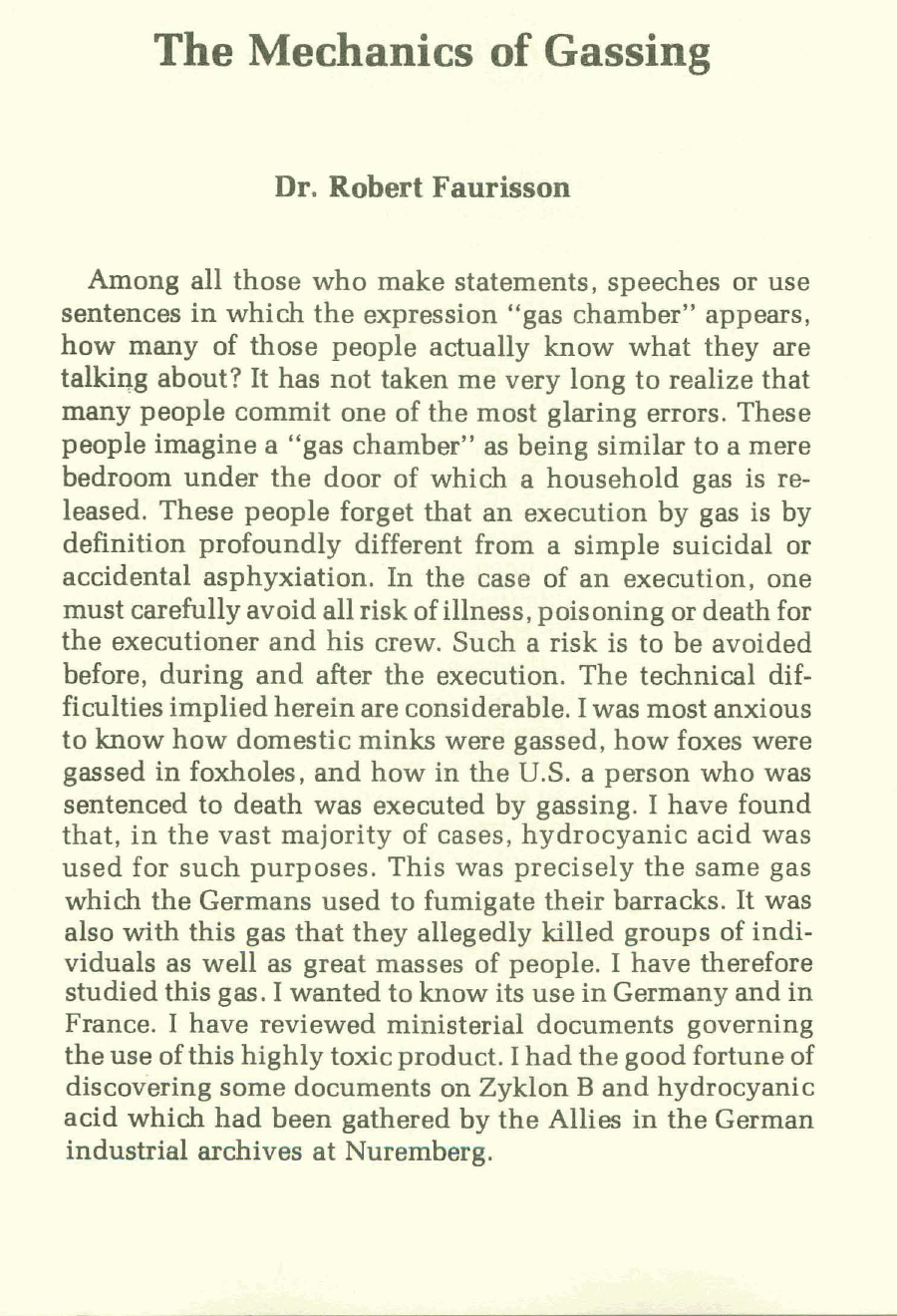
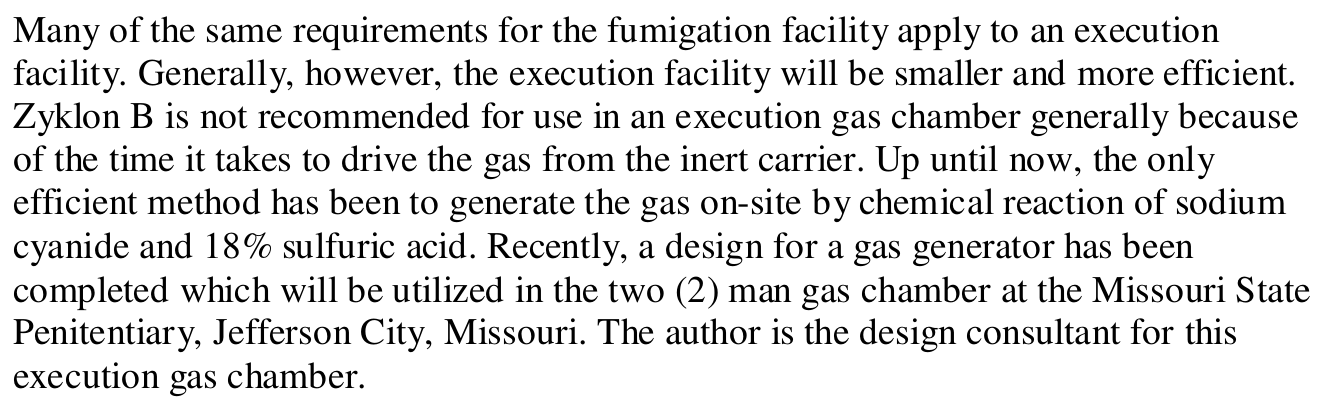
The shared structure is not a generic interest in HCN. Both begin with American judicial chambers and treat their safety and clearance hardware as requirements for judging the camp installations. The main critique shows why that functional equivalence was never demonstrated.
Vacuum, neutralization, and sealed-chamber detail
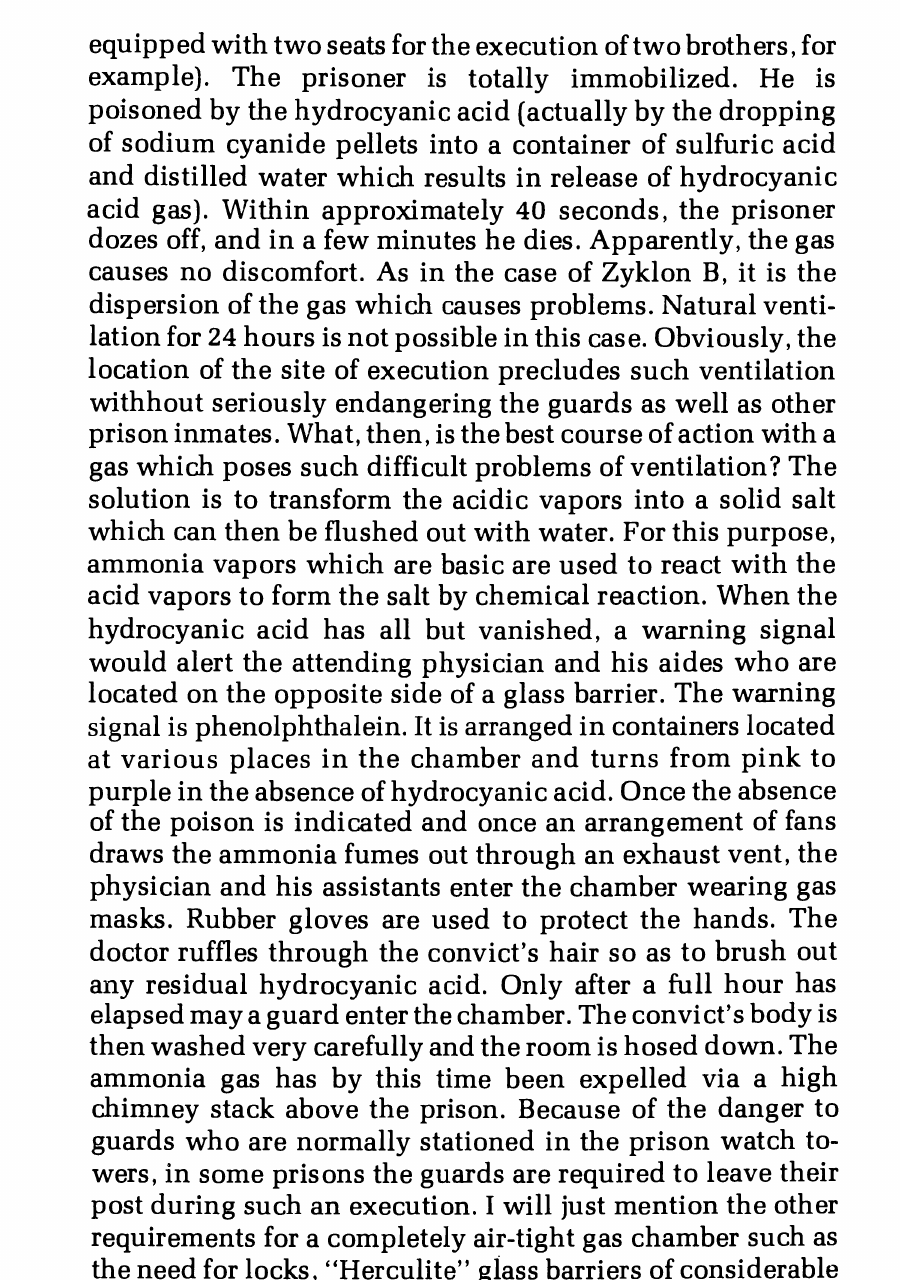
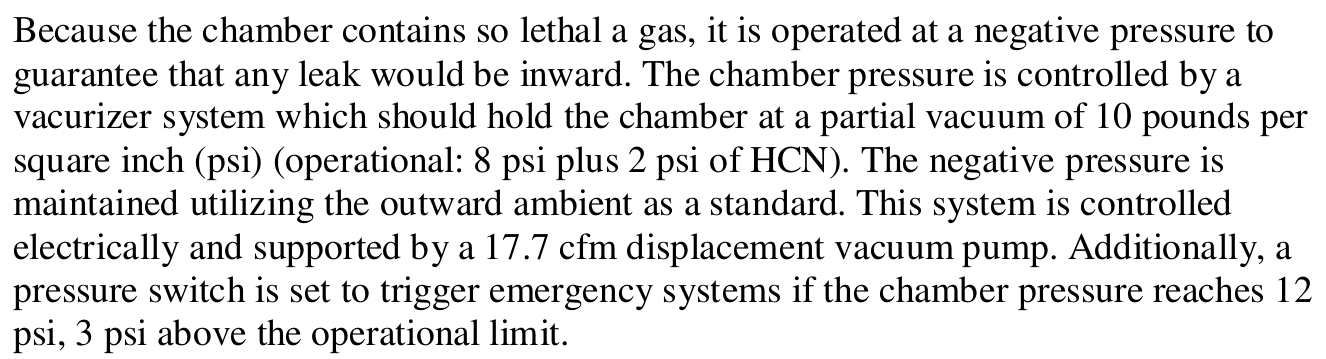
The technical inventory and the inference drawn from it are already present in the earlier article. The report expands the American specifications, then treats them as necessities rather than one design for a different operating regime.
NI-9912, airing time, masks, and explosion
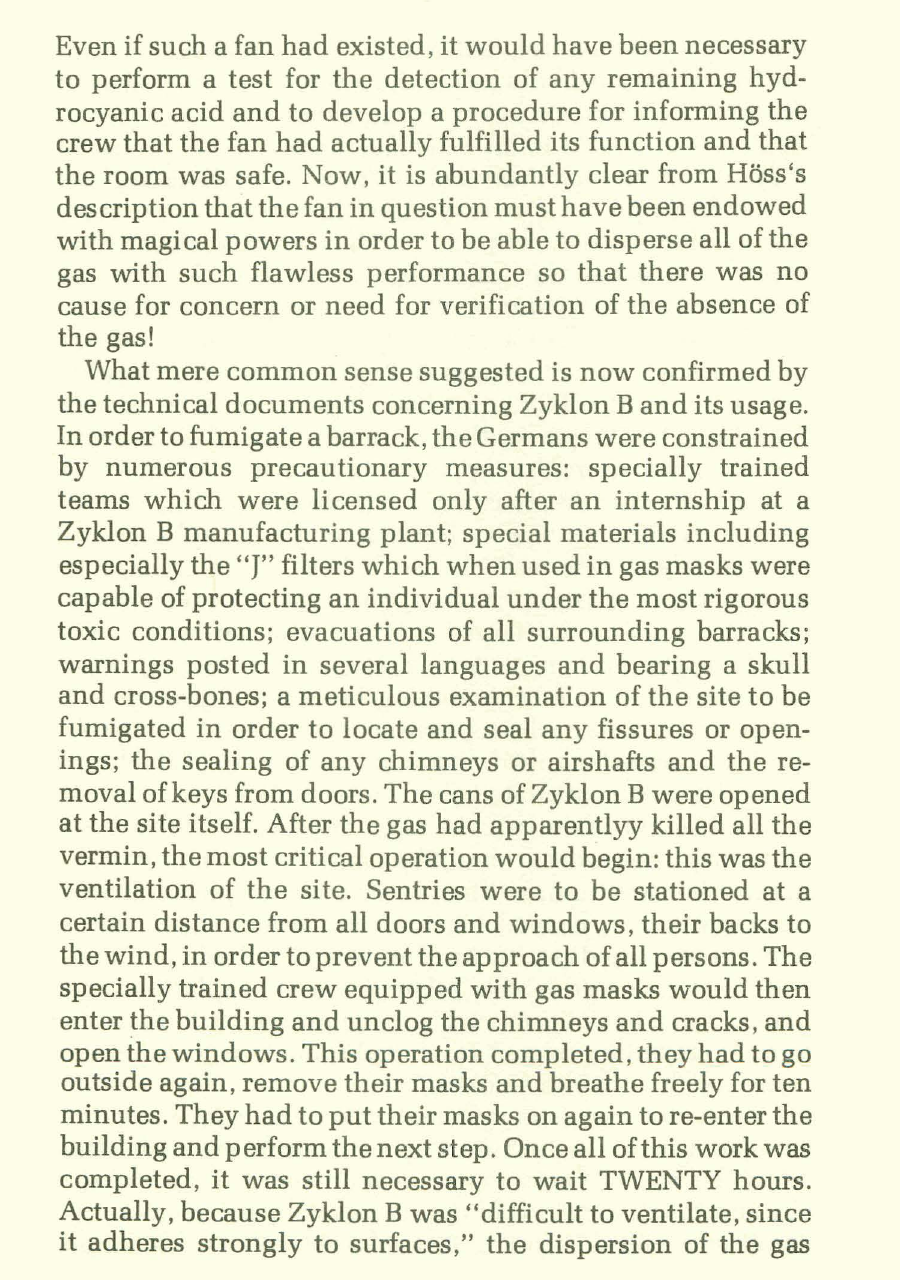
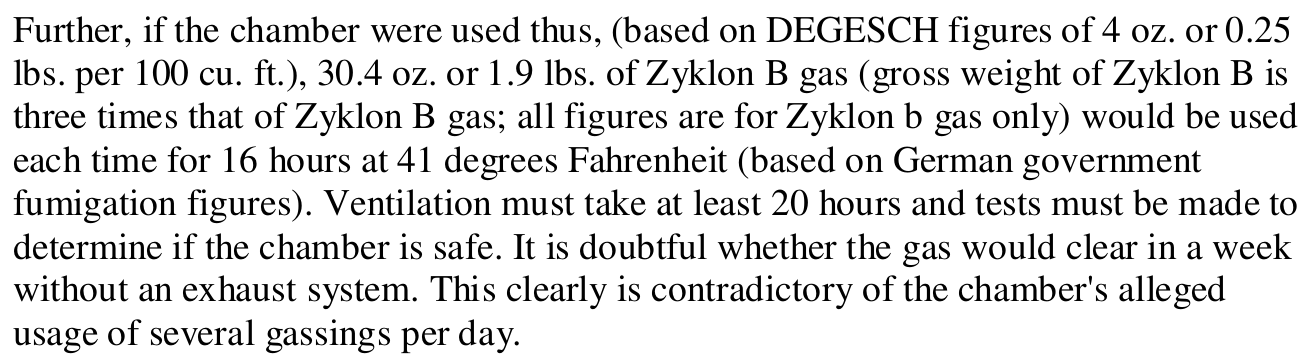
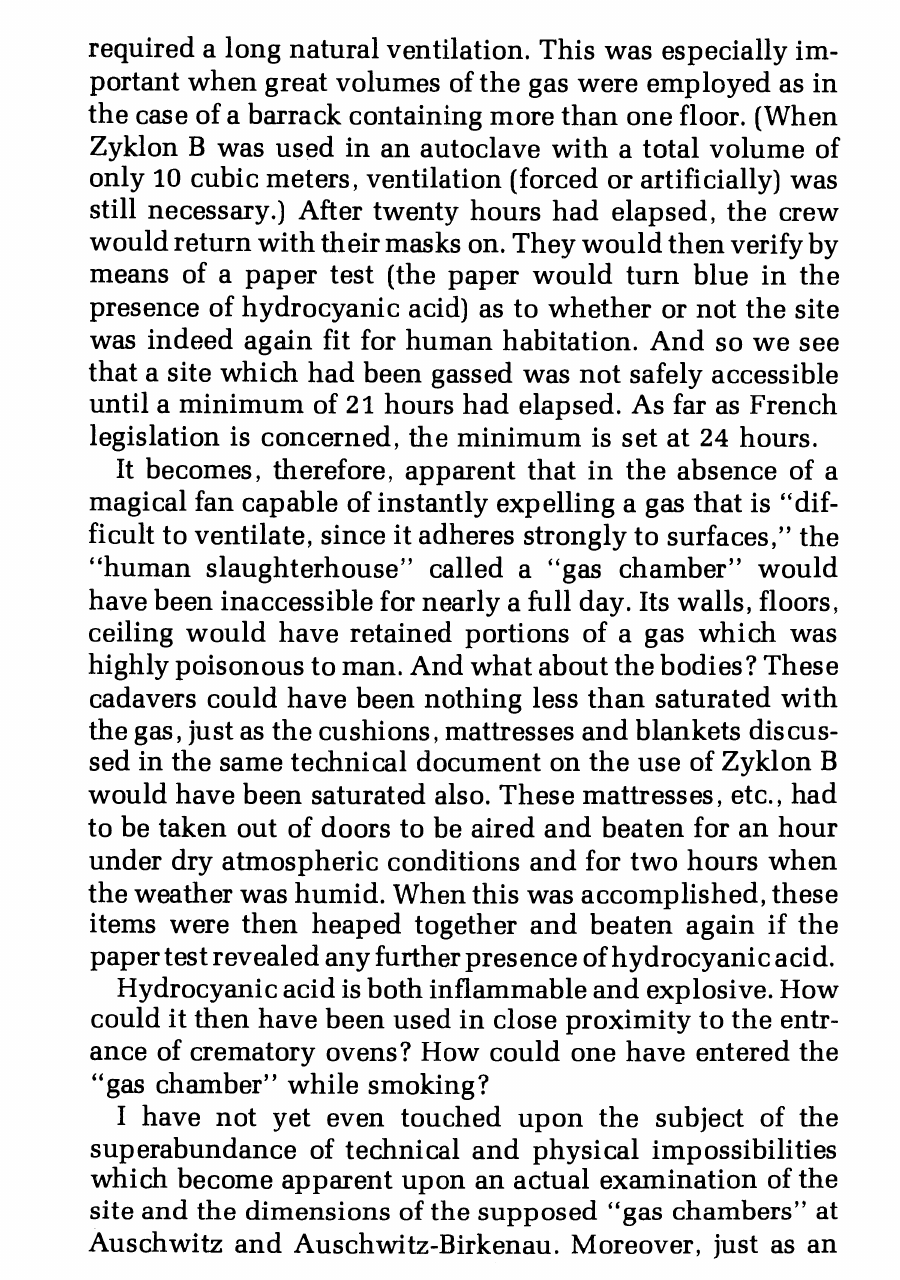
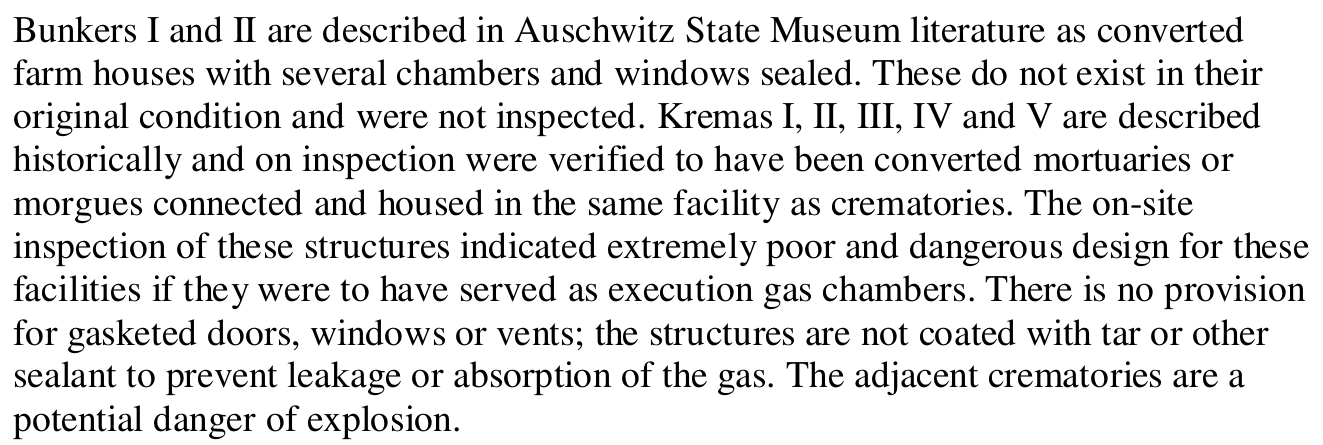
These are the report's central inferential moves, already assembled in 1980: insect-fumigation reoccupation time becomes the chamber turnaround time; American operator safeguards become universal construction rules; and flammability becomes an unquantified objection to lethal HCN near ovens.
The report names the source
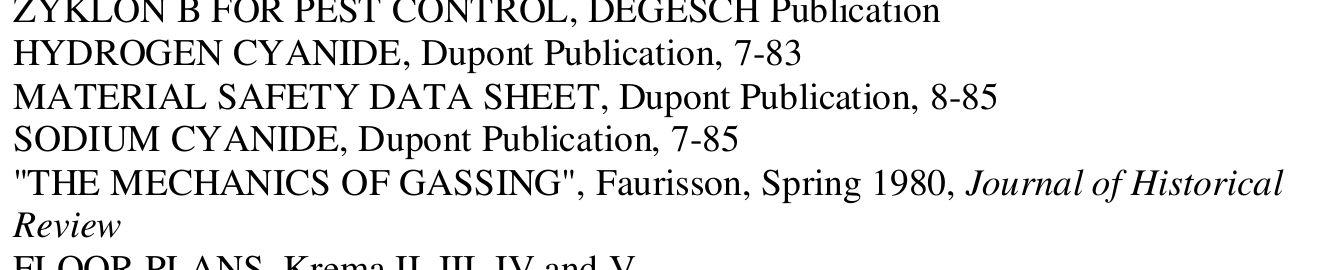
Conceptual dependence is therefore not merely inferred from similarity. The report itself identifies Faurisson's 1980 article among its sources.
No exact run of eight or more normalized words appears in the tested English witnesses
The test normalized case, punctuation, and spacing, then looked for contiguous English word runs in all 123 public report-body units against five pre-1988 Faurisson witnesses. No run reached the stated eight-word threshold. The longest runs were generic Zyklon phrases:
| Report unit | Words | Normalized phrase |
|---|---|---|
| LR1-033-P03 | 7 | “as in the case of zyklon b” |
| LR1-033-P04 | 7 | “the use of zyklon b would have” |
This is evidence against demonstrable sentence-level copying in the available English witnesses. It is not proof of independent authorship: translation, paraphrase, oral transmission, and editing can remove exact overlap.
Data and method: full JSON result · match table · comparison script.
The later ghostwriting allegation is real but uncorroborated
Rudolf's source is a 2025 recollection of an unrecorded call
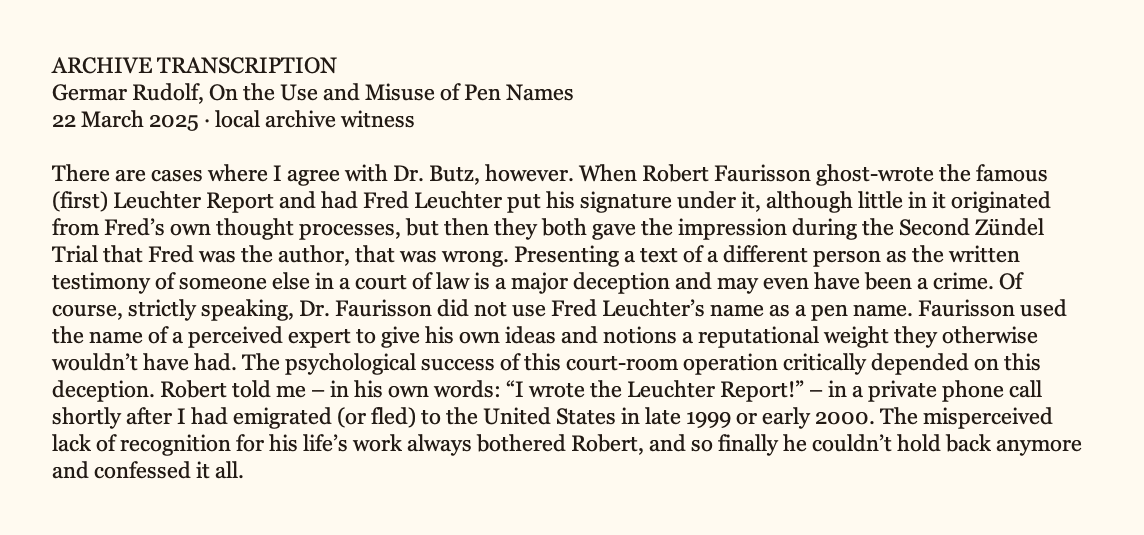
The image establishes what Germar Rudolf published in 2025. It is evidence that Rudolf remembers hearing the quoted claim. It is not a recording, draft, letter, or contemporaneous account of the report's composition.
Leuchter later said he wrote the report
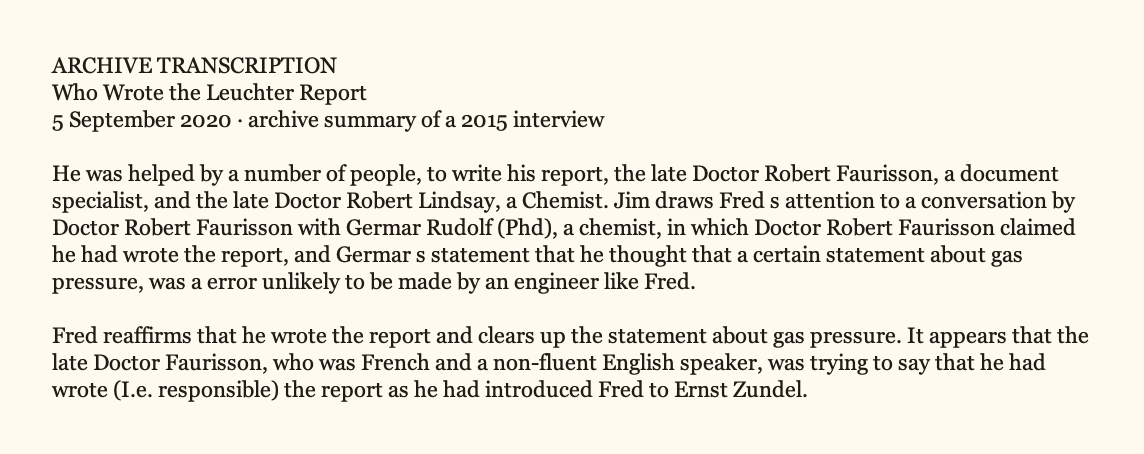
This is an archive editor's summary, not an interview transcript or contemporaneous authorship record. It still records Leuchter's contrary account: Faurisson and Robert Lindsay helped, but Leuchter says he wrote the report.
Butz argued for co-authorship because of Faurisson's questions
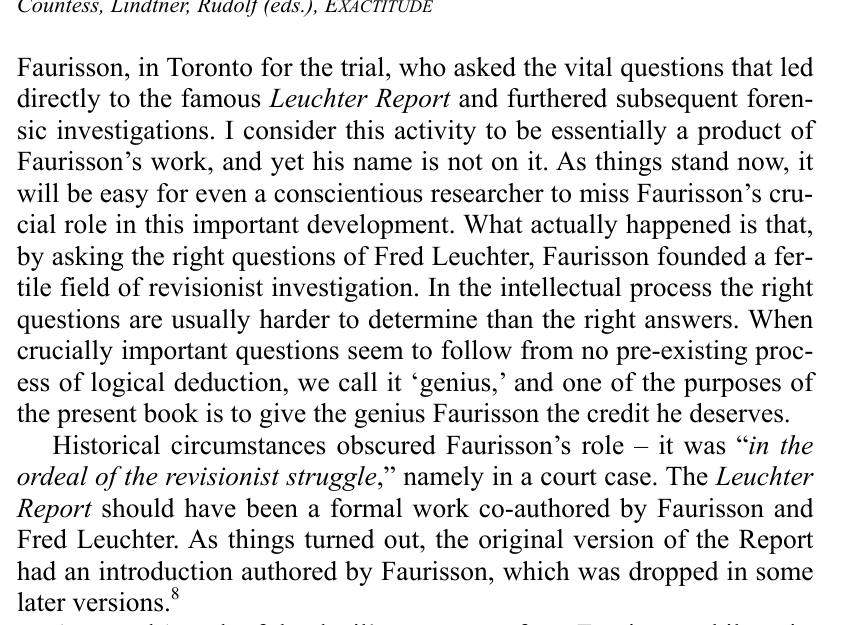
Butz's assessment supports substantial intellectual credit and co-design of the inquiry. It does not report that Faurisson drafted the English manuscript. Faurisson's April 1988 foreword, which twice attributes writing to Leuchter, also conflicts with a confident sole-author theory.
The texts are not mechanically identical

This direct inversion matters. It does not prove Leuchter wrote the report, and an author can contradict himself. It does show that the report is not a simple transcription of the 1980 article. Mixed sources, later additions, or poorly reconciled collaboration fit the surviving text better than a claim that one hidden author copied a settled script throughout.
Findings on influence and authorship
The evidence supports intellectual and programmatic influence and co-design of the inquiry. Editorial involvement is plausible but undocumented. Sentence-level ghostwriting, concealed authorship of the entire report, and sole authorship are not established.
Provenance register
The manifest records local paths, file sizes, SHA-256 values, relevance, and source-specific caveats. Open the machine-readable manifest.
- An Engineering Report on the Alleged Execution Gas Chambers at Auschwitz, Birkenau and Majdanek, Poland · local witness
Report text, bibliography, and Faurisson foreword. Authorized digital text witness carrying the Samisdat 1988 notice; not a page-faithful scan of the original paper object.
- The Journal of Historical Review, vol. 1, no. 1, including Robert Faurisson, The Mechanics of Gassing · local witness
Contemporaneous page images for Faurisson's pre-report argument program. Scanned from a denial publication and used only as a primary provenance witness.
- Faurisson's Three Letters to Le Monde (1978-1979) · local witness
Pre-report comparison witness for exact English phrase testing. Later English translation and republication; the editorial introduction is excluded from the comparison.
- The Mechanics of Gassing · local witness
The strongest pre-report witness to the report's inherited argument architecture and a source named in the report bibliography. Archive transcription checked against the 1980 scan for the displayed passages.
- The Gas Chambers of Auschwitz Appear to be Physically Inconceivable · local witness
Pre-report comparison witness for exact English phrase testing. Publication and translation history is less secure than the 1980 scan; used conservatively.
- The Gas Chambers: Truth or Lie? · local witness
Pre-report comparison witness for exact English phrase testing. Only answer blocks attributed to Faurisson are included; interviewer questions are excluded.
- Response to a Paper Historian · local witness
Pre-report comparison witness for exact English phrase testing. English publication witness; translation and later archive transcription may differ from the French editions.
- On the Use and Misuse of Pen Names · local witness
The direct published ghostwriting allegation: Germar Rudolf's recollection of what Faurisson allegedly said in a private 1999-2000 phone call. A decades-later recollection of an unrecorded private conversation, not contemporaneous documentation of composition.
- Who Wrote the Leuchter Report / 2015 Fred Leuchter interview summary · local witness
Records Leuchter's later reaffirmation that he wrote the report. Later testimony and a partisan archive summary; weaker than a contemporaneous draft or correspondence.
- Festschrift for Robert Faurisson: Arthur Butz contribution · local witness
Butz wrote that Faurisson asked the vital questions that led directly to the report and that the work should have been formally co-authored. An assessment of intellectual contribution, not eyewitness evidence that Faurisson drafted the report's English prose.